
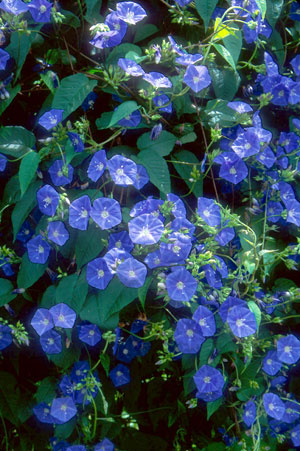
Sky Blue Cluster Vine- (Jacquemontia pentanthos) is a charming and vibrant flowering vine that adds a touch of elegance to gardens and landscapes. Native to Central America and parts of the Caribbean, this vine typically grows to a height of 6 to 12 feet and spreads along fences, trellises, or other support structures. Skyblue Clustervine is well-suited for USDA hardiness zones 8 to 11, making it adaptable to a range of climates.
Thriving in full sun to partial shade, Jacquemontia pentanthos is known for its resilience and ability to tolerate various soil types, from well-draining sandy soils to loamy soils. It produces striking sky-blue or lavender-colored funnel-shaped flowers that bloom profusely during the warmer months, attracting pollinators such as bees and butterflies. The vine’s delicate and lush foliage provides an attractive backdrop to the vibrant flowers. To plant Skyblue Clustervine, space individual plants about 2 to 3 feet apart to allow for proper growth and climbing space.

Passion Vine -(Passiflora incarnata) is a captivating and versatile flowering vine that adds a touch of beauty and charm to gardens while also providing ecological and medicinal benefits. Native to southeastern North America, this perennial vine typically grows to a height of 6 to 10 feet, spreading along fences, trellises, or other support structures. Passiflora incarnata is well-suited for USDA hardiness zones 5 to 9, making it adaptable to a wide range of climates.
Thriving in full sun to partial shade, Purple Passionflower is known for its adaptability to various soil types, including well-draining sandy soils and clayey soils. It produces stunning and intricate flowers that showcase a unique combination of colors, including shades of purple and white. The vine’s three-lobed leaves add to its visual appeal, creating a lush and textured foliage backdrop for the striking blooms. To plant Passiflora incarnata, space individual vines about 3 to 5 feet apart to allow for proper growth and climbing space.
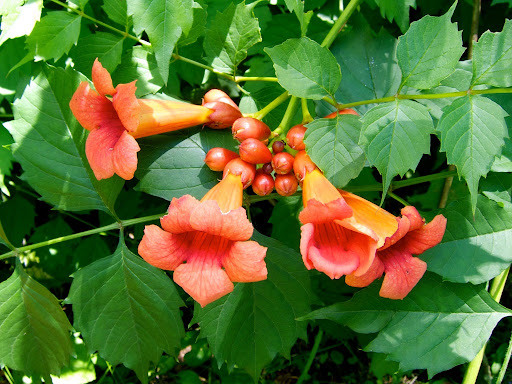
Trumpet Vine- (Ampsis Radicans) is a vigorous and eye-catching flowering vine that adds a burst of color and vibrancy to landscapes. Native to the southeastern United States, this deciduous vine can reach impressive heights of 30 to 40 feet (9 to 12 meters), with a spread of 5 to 10 feet. Trumpet Vine is well-suited for USDA hardiness zones 4 to 9, making it adaptable to a variety of climates.
Thriving in full sun to partial shade, Trumpet Vine is known for its resilience and ability to tolerate a range of soil types, from well-draining sandy soils to clayey soils. It produces striking trumpet-shaped flowers in shades of orange, red, or yellow, which bloom profusely during the summer months, attracting pollinators such as hummingbirds and bees. The vine’s dark green, compound leaves provide an attractive backdrop to the vibrant blooms. To plant Campsis radicans, space individual vines about 5 to 10 feet apart to allow for proper growth and climbing space.
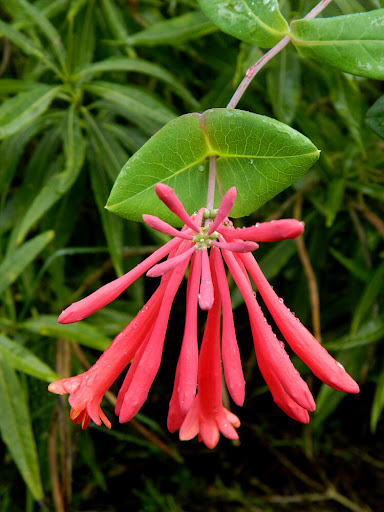
Coral Honeysuckle-(Lonicera Sempervirens) is a delightful and versatile native vine that brings both beauty and ecological value to gardens and landscapes. Native to the southeastern United States, this perennial vine typically grows to a height of 6 to 10 feet, with a spread of 3 to 6 feet. Coral Honeysuckle is well-suited for USDA hardiness zones 4 to 9, making it adaptable to a wide range of climates.
Thriving in full sun to partial shade, Coral Honeysuckle is known for its adaptability to various soil types, including well-draining sandy soils and loamy soils. It produces clusters of tubular, coral-red to orange flowers with yellow throats that attract pollinators like hummingbirds, bees, and butterflies, making it a favorite for wildlife-friendly gardens. The vine’s semi-evergreen foliage provides a lovely backdrop to the vibrant blooms and remains attractive throughout the year. To plant Lonicera sempervirens, space individual vines about 3 to 6 feet apart to allow for proper growth and climbing space.
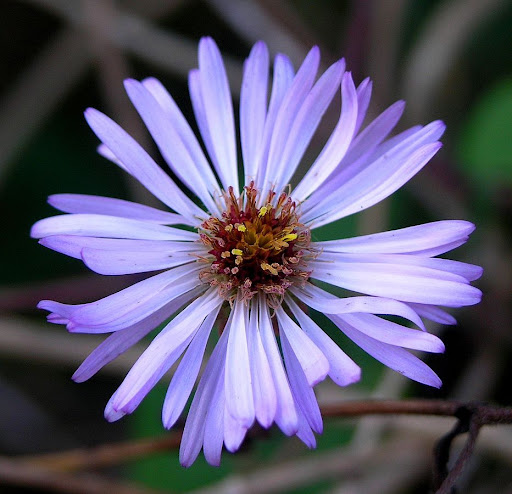
Climbing Aster- (Symphyotrichum Carolinianum) is a native herbaceous perennial plant that graces landscapes with its delicate blooms and contributes to the health and diversity of local ecosystems. Native to the eastern United States, this aster species typically grows to a height of 2 to 4 feet, forming clumps or mounds of foliage. Symphyotrichum carolinianum is well-suited for USDA hardiness zones 3 to 9, making it adaptable to a wide range of climates.
Thriving in full sun to partial shade, Climbing Aster prefers moist to wet soils and is often found in wetland areas, along stream banks, and in open woodlands. It produces charming daisy-like flowers with lavender-blue petals and yellow centers, which provide nectar for pollinators like bees and butterflies, contributing to the health of local insect populations. The plant’s slender stems may climb and trail over other vegetation, adding to its visual appeal. To plant Symphyotrichum carolinianum, space individual plants about 1 to 2 feet apart to allow for proper growth and clumping.
 Go Native Landscaping and Design